The team
1 UX writer, 1 product designer, design manager, development team, compliance team, Health Canada (government), 1 product manager
 Skills
Conceptualization, user research, product planning, competitor analysis, create scripts, interviews along with synthesis, create user flows, create wireframes, designs, iteration.
Programs
Figma, Figjam, Userzoom, Zoom.
Technology
Product design, User experience, User Interface, Agile.
The primary goal of this project is to conduct a UX audit for the Group Benefits Sponsor Portal, also known as the RADS platform. Managed by the RADS team, this reporting web platform is essential for fulfilling HC's (Health Canada) requirements to track data. The platform contains over 100 downloadable report documents, which users—including administrative assistants, data scientists, program managers, and even Canadian Ministers of Parliament—store in a Health Canada system for internal use.
My task is to perform a comprehensive heuristic evaluation, identifying usability issues based on established principles. This evaluation will provide leadership with key insights to help determine the project's next steps, whether that's a complete redesign or focusing on critical MVPs, such as addressing major UX design issues, documentation inconsistencies, and accessibility needs. By streamlining the design process and saving resources, this evaluation will lay the groundwork for informed decisions on scope, budget, and UX improvements.
Journey map & heuristic evaluation
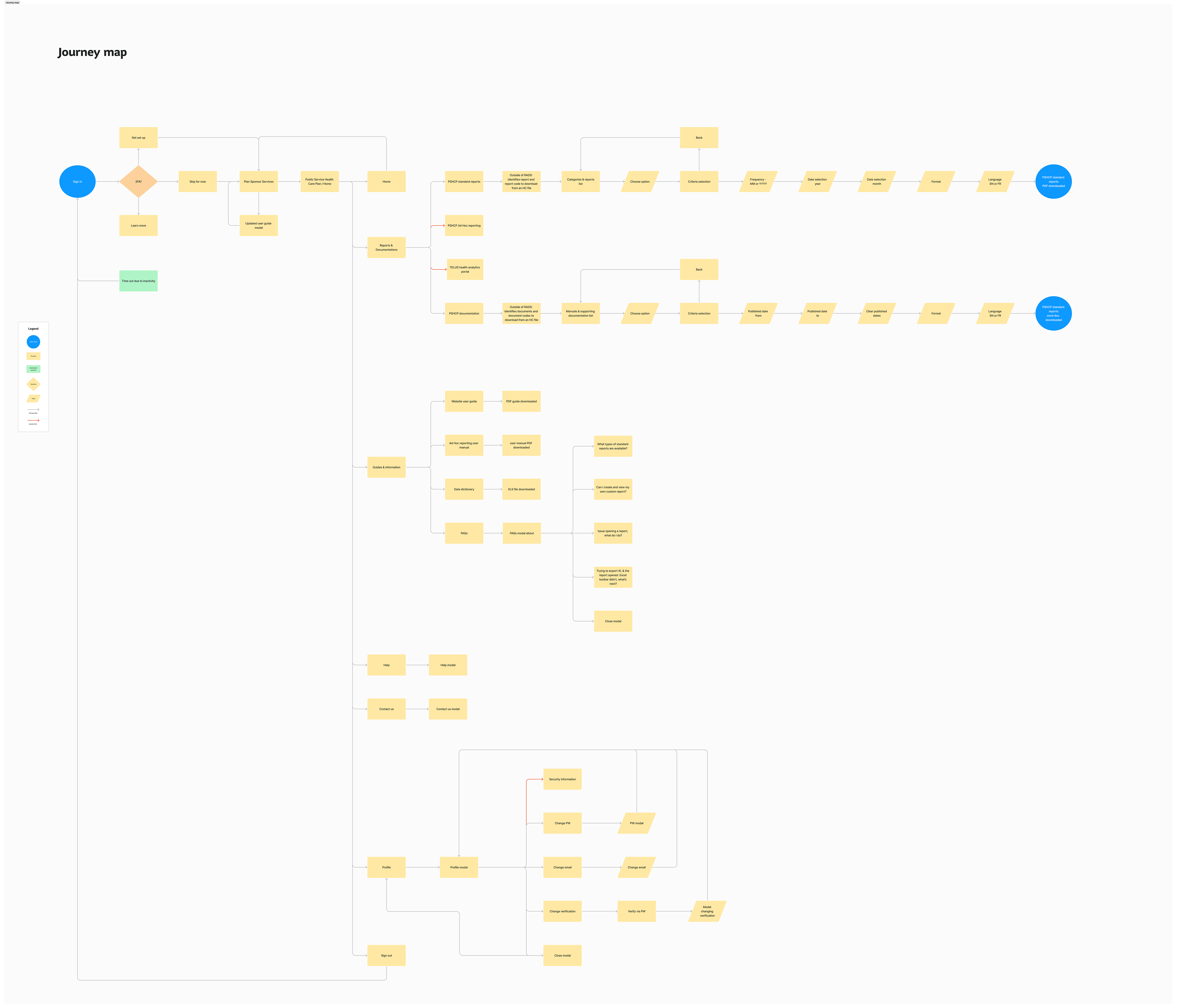
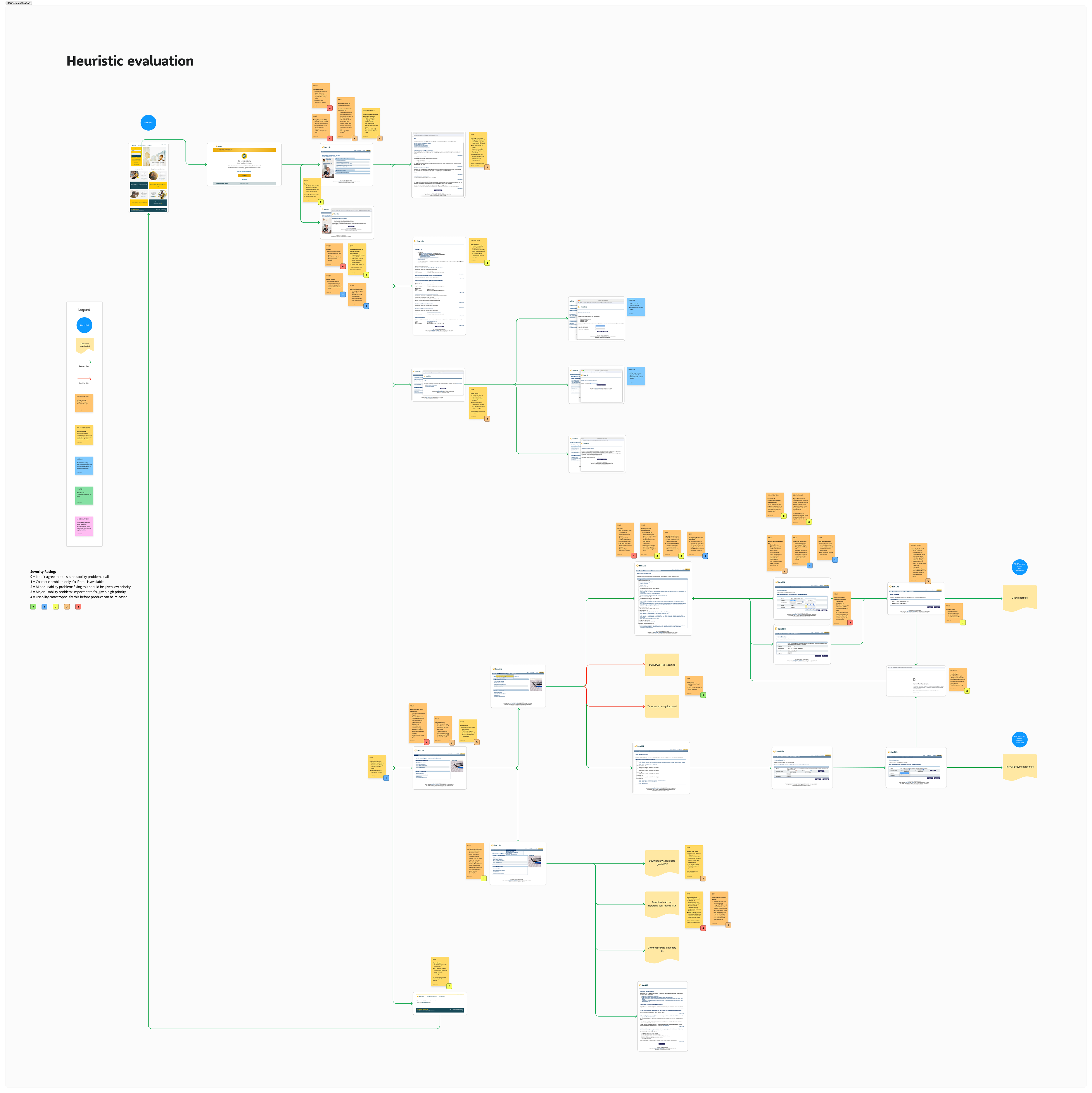
To effectively identify pain points within the platform, I first needed to gain a thorough understanding of its flow. Since there was no existing documentation, I began by creating a journey map, which provided a comprehensive overview of the platform's user journey. This foundational work made it easier to conduct a heuristic evaluation to identify usability issues throughout the platform. Using Jakob Nielsen's 10 usability heuristics, I assigned a score from 0 to 5 to each pain point. I then categorized these pain points into two groups: those that the RADS development team could address and those requiring input from other development teams not directly involved in this project. I documented all issues, including those outside the immediate scope, to support future planning if priorities shift.
Synthesis
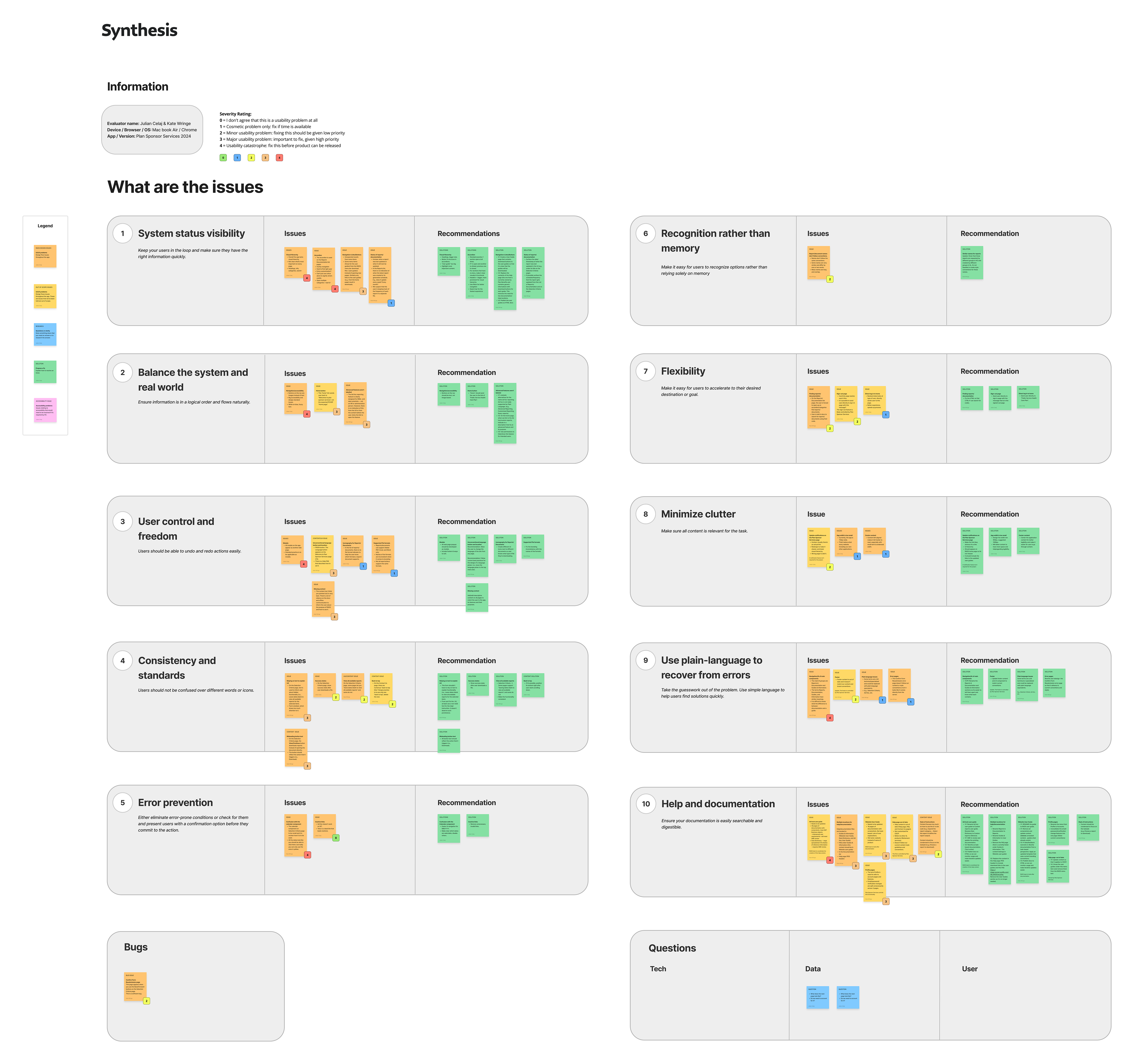
After completing the journey mapping and heuristic evaluation, I entered the synthesis phase by organizing and categorizing the identified issues across the platform. Through a structured synthesis process, I documented pain points, aligned each with Jakob's 10 usability heuristics, and provided specific recommendations to deliver actionable insights for the business.
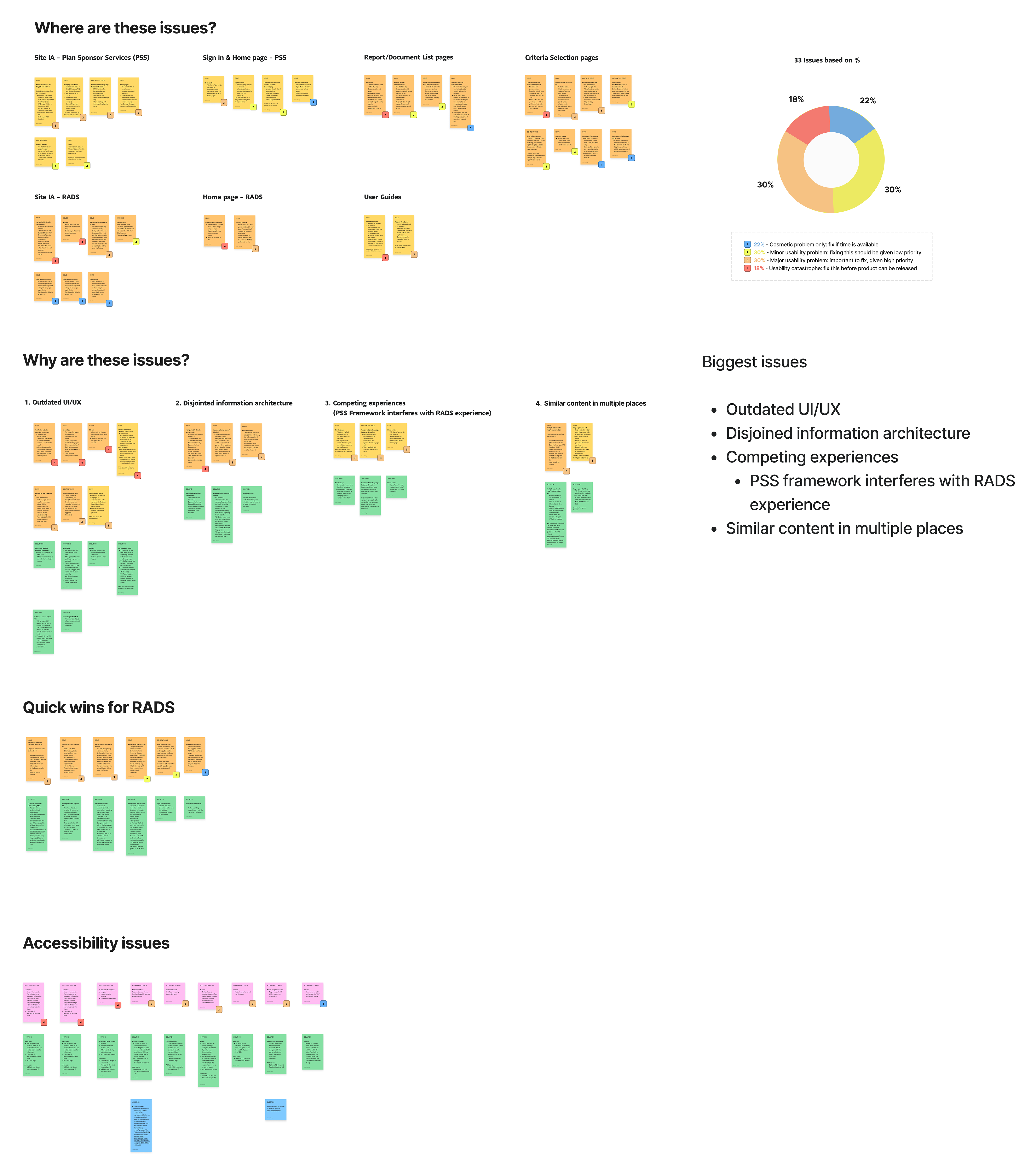
The synthesis visuals illustrate a systematic breakdown of issues, grouped by heuristic principles and prioritized based on impact. Each category—such as system status visibility, flexibility, and consistency—presents identified problems alongside corresponding recommendations. Additionally, the visual summary maps out where issues occur within the platform, explains the underlying causes, and highlights "quick wins" that RADS can implement for immediate improvements.
UX planning
Following the synthesis, our design manager worked with the UX writer and me to establish a review process and timetable to present our findings to the RADS and Health Canada teams. This approach aimed to provide the business teams with a clear understanding of the budget and scope required for a comprehensive web platform redesign. Additionally, the design manager consulted with the Sun Life compliance team to determine if compliance would be included in the MVP. This decision would significantly influence whether the project would focus solely on addressing MVP-level pain points or proceed with a complete platform redesign.
Conclusion
Throughout this project, I developed a journey map, conducted a heuristic evaluation, and synthesized all identified pain points. Afterward, I presented the documentation to the RADS leadership, who then shared the insights with Health Canada. Additionally, the design manager presented the UX timeline to leadership, providing them with a comprehensive view of the project's timetable, scope, and budget. All of these insights enabled leadership to make informed decisions about the future direction of the platform.
Ultimately, leadership chose to proceed with an MVP approach rather than a full platform redesign, focusing on improving pivotal design and content pain points. I maintained close communication with the development team and their director throughout the development process to promptly address any questions, ensuring a smooth and efficient project cycle.